Architecture & system design
Microservices and modular monoliths, API and event-driven contracts, database and platform design, trade-off analysis.
BOUNDARIES · DECISIONS · EVIDENCE
Reducing ambiguityBOUNDARIES · DECISIONS · EVIDENCE
Reducing ambiguity
I design systems that make complexity understandable, boundaries explicit, and decisions traceable—from business problems and architecture to deployment and operations.
Expert to production— the stack behind the work
Capability
Microservices and modular monoliths, API and event-driven contracts, database and platform design, trade-off analysis.
.NET and Angular in enterprise delivery—foundational project structures, shared codebases, and reusable core components.
Containerised workloads on Kubernetes and K3s, Traefik, network policy, monitoring with Grafana, Prometheus, and Loki.
Agentic workflows, prompt engineering, LLM evaluation and guardrails, local LLM deployment, NLP, and translation.
Levels are ordinal—Expert, Production, Hands-on, Familiar—matched to real delivery evidence rather than a self-scored percentage. RAG, vector databases, and Terraform stay at Familiar until production work supports a higher level.
CAREER ARC
The transition did not begin with a title change. It happened as responsibility expanded from building features to defining foundations, contracts, identity, data flows, deployment models, review practices, and artifacts other teams could continue.

METHOD
Separate what is known, assumed, constrained, and still missing evidence before selecting technology.
Compare options through delivery time, maintainability, operating cost, risk, and integration cost.
First end-to-end university project: problem, UI, database, implementation, and deployment coordination.
Back-office, automation, reporting, ERP, and product delivery across complete application workflows.
Enterprise and GIS systems, reusable foundations, batch processing, integration, and identity boundaries.
Official Senior Programmer Analyst role with broader architecture ownership, review, mentoring, platform, and production-readiness responsibilities.
Growing toward Solution Architect capability and AI Infrastructure through owner-created demos, governance artifacts, and measurable engineering work.
WORKING PRINCIPLE
A system becomes operable when the team can see who owns each decision, where trust changes, what integration costs, and how failure will be detected and handled.
Make the owner, decision boundary, and hand-off visible before the system grows.
Identify where identity, data, permissions, and verification change meaning.
Treat compatibility, coordination, and change propagation as real delivery cost.
Design how the system is deployed, observed, recovered, and continued by others.
Selected work

A corporate site for an aesthetic clinic—promotions, product pages, results, and articles—built on WordPress.
WordPress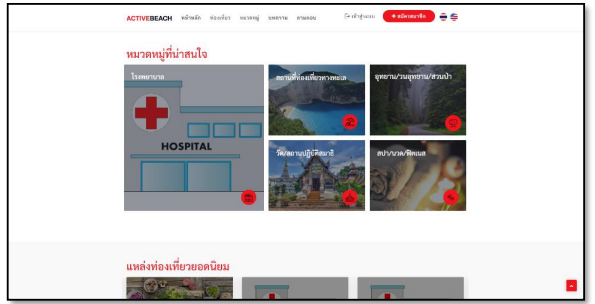
Back-office and RESTful API for the public site, plus a content-based recommendation component using NLP across four eastern seaboard provinces. Python and .NET Core.
Python · .NET Core · NLP · REST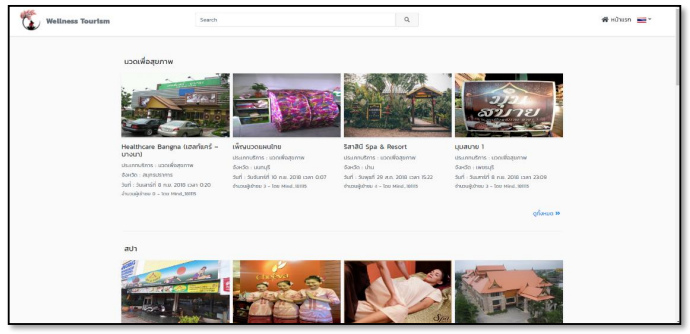
A research platform using fuzzy-based collaborative filtering to recommend related wellness destinations. Machine learning in Python, a C# console for processing, PHP Laravel, React, and PWA delivery.
Python · C# · Laravel · React · PWA
A bilingual product and company site for a thermal-camera and electrical-instrument distributor, built on WordPress.
WordPress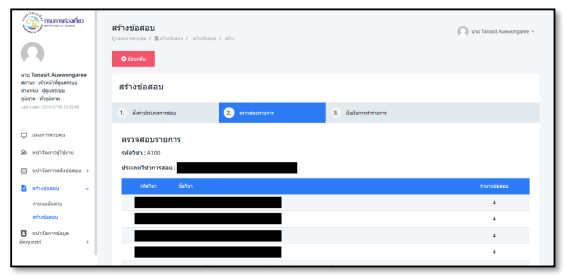
A knowledge-assessment platform for tourist-guide certification, delivered for the Department of Tourism under Suan Dusit University. PHP Laravel for the web, with a C# console to generate randomised exam sets.
Laravel · C# · MSSQL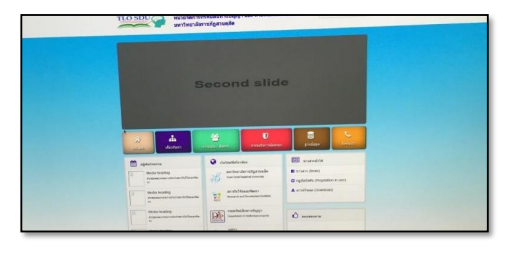
The departmental site for the intellectual-property management unit at Suan Dusit—built in PHP during my third year, end to end: requirement, interface, database, and deployment with the university IT team.
PHP · MySQLDesigned microservices-based applications and set the technical approach per project. Backend in .NET and Go, web in Angular, containerised workloads on Kubernetes, legacy migrations, code review, technical consultation and mentoring.
Full-stack delivery with .NET and Angular. Established foundational project structures and reusable core components, and built shared codebases and utilities that improved consistency across project teams. GIS and ERP for government and private-sector organisations.
Joined a GIS project as an outsourced developer on a six-month contract, building web applications with Angular and the ArcGIS API for JavaScript in a Scrum team—and was offered a direct position before it ended.
ERP and HR web applications for government agencies and private organisations with ASP.NET MVC and Core MVC, designed on N-tier architecture, plus reusable shared components and hardware-integration troubleshooting.
Joined as an intern and later took primary responsibility for designing and building two internal systems—a report generator and a callout system—under senior review. Automation for low-touch operations and high-performance reporting over large datasets.
COMMUNICATION IN PRACTICE
These images show the context of teaching, user training, presenting, and community participation. They do not replace technical evidence.
How I work
No client quotes on this page—endorsements need consent, and consent has not been given. These are the working rules instead; they are checkable against everything above.
See the system“Make responsibility, trust, data, integration and operational boundaries explicit before selecting technology.”
“Delivery time against maintainability, capability against operating cost, autonomy against governance—written down with assumptions and limitations.”
“A diagram is useful only when it makes ownership and failure behaviour clearer; a technology only when it fits the team that must maintain it.”
PLAYGROUND EVIDENCE
These projects demonstrate patterns and reasoning. They are not customer systems. Pending references remain visible placeholders until the owner supplies the links.
Source name: template cli สำหรับ angular
A source example for generating a repeatable Angular application foundation so teams begin from explicit conventions instead of rebuilding setup decisions in every repository.
Limitation: Repository, compatibility matrix, and generated-output tests are not yet linked publicly.
Source name: template cli สำหรับ netcore api clean architecture
A CLI source example that generates a .NET API with presentation, use-case, domain, repository-port, and infrastructure boundaries.
Limitation: Generated structure, tests, and supported .NET versions remain link-pending.
Source name: template cli สำหรับ netcore worker clean architecture
A source template for background-processing services where scheduling, domain rules, adapters, retries, and operating behavior need separate ownership.
Limitation: Retry, idempotency, and deployment examples are not yet available as public evidence.
Source name: code base netcore
A reusable application foundation intended to centralize cross-cutting behavior while keeping feature ownership visible.
Limitation: The public package boundary and compatibility policy are pending.
Source name: code base libraries
A library collection for reusable capabilities whose value depends on explicit contracts, versioning, and a narrow dependency surface.
Limitation: Library inventory, package versions, and consumer examples remain pending.
Source name: realtime chat + AI translator
A demo that combines realtime message delivery with AI-assisted translation while keeping transport, translation, retention, and failure behavior as separate responsibilities.
Limitation: Not a customer production system. Public transport, model, retention, and benchmark evidence are link-pending.
CAPABILITY INVENTORY
Skills are grouped by evidence level. Technology supports the story; it does not replace responsibility, operating context, or outcome evidence.
Used in delivered systems; depth varies by responsibility and project.
Capabilities supported by project responsibilities rather than technology badges.
Hands-on or supporting experience without an expert-level claim.
Owner-created experiments, skills, writing, and active engineering study.
CONTENTS
The articles challenge a common premise, trace responsibility and trade-offs, surface hidden failure modes, and end with an operational principle.
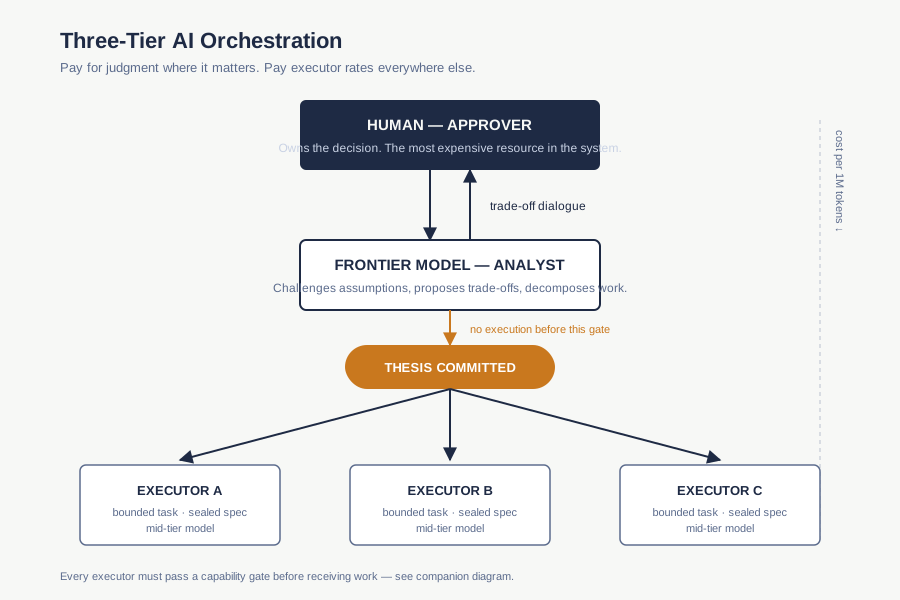
A three-tier orchestration model that separates approval, frontier analysis, and bounded execution.
Read the argument ↗
Execution budgets, model routing, worker isolation, state, observability, and human approval.
Read the argument ↗Lookahead, conversational repair, and the boundary between low latency and translation quality.
Read the argument ↗
Why more parallel AI work can increase throughput while extending completion and supervision time.
Read the argument ↗CONTACT
Share the outcome, constraints, current system, and the evidence that is still missing. That is enough to begin reducing ambiguity.
[email protected]